
Blog
The Ultimate Troubleshooting Guide: Solenoid Valves in Commercial Plumbing

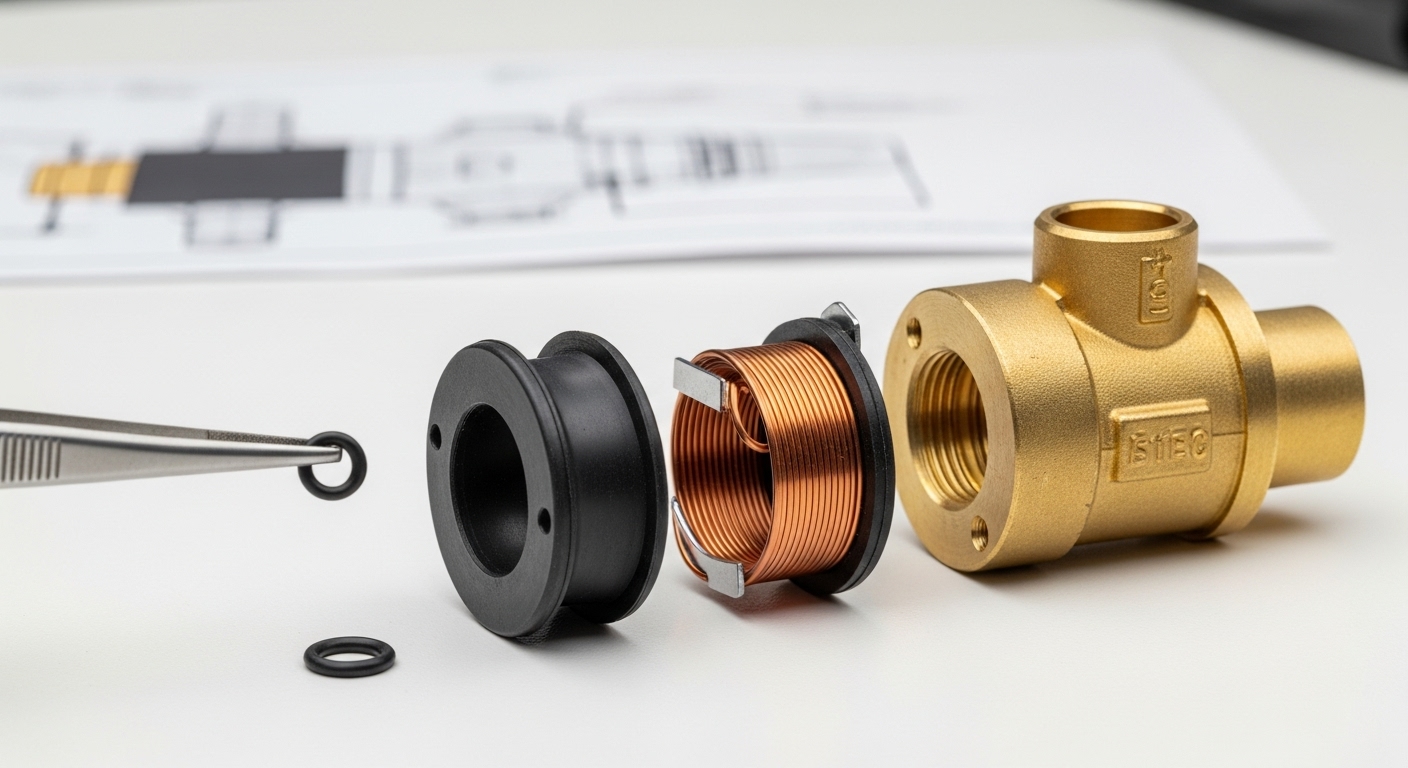
Introduction In commercial facilities—whether it’s an airport terminal, a busy restaurant, or an office building—downtime is not an option. Your automated sanitary systems rely heavily on solenoid valves to control water flow efficiently. But when a valve fails, it can lead to costly water waste, hygienic risks, or closed facilities.
The good news? Most solenoid valve issues are mechanical rather than terminal. Before you replace the entire unit, run through this troubleshooting guide to identify common faults like debris blockages, diaphragm wear, or voltage mismatches.
1. The Problem: The Valve “Clicks” But Won’t Open
This is the most common support query we receive. You hear the magnetic coil activate (the distinct “click”), but no water flows.
- The Likely Cause: Blocked Pilot Hole. Most commercial solenoid valves are “pilot-operated.” They rely on a tiny hole in the diaphragm to equalize pressure. If dirt, scale, or debris blocks this hole, the pressure differential needed to lift the diaphragm is never created.
- The Fix: Disassemble the valve carefully. Locate the diaphragm and clean the pilot hole using a fine needle or compressed air. Ensure the spring is intact and reassemble.
2. The Problem: The Valve Won’t Close (Leaking)
A valve that constantly runs or drips is a major water waster.
- The Likely Cause: Debris on the Valve Seat. Even a tiny grain of sand or rust caught between the diaphragm and the valve seat will prevent a watertight seal.
- The Fix: Inspect the rubber diaphragm for tears or warping. If it looks healthy, check the brass seat for sediment. flushing the line before installing a new valve is critical to preventing this from recurring. Pro Tip: Always install an inline filter upstream of your solenoid valves to catch debris.
3. The Problem: The Coil is Overheating or Burning Out
Solenoid coils should get warm, but they should never be too hot to touch.
- The Likely Cause: Voltage Mismatch or Stuck Plunger.
- Voltage: Double-check your power source. Connecting a 12V DC coil to a 24V AC transformer will cause rapid overheating and failure.
- Stuck Plunger: If the internal metal plunger is jammed (by rust or debris) and cannot move inside the coil, the magnetic field generates excess heat instead of mechanical motion, eventually burning out the copper winding.
4. Maintenance Checklist for Longevity
To extend the life of your Benkiser components, we recommend a simple annual check:
- Check Filters: Clean aerators and inline mesh filters.
- Listen: Listen for “water hammer” (loud banging when closing), which can damage valves over time.
- Inspect Seals: Look for calcification around the valve body.
Need a Replacement Part?
Sometimes, a valve is simply past its lifecycle. If you need a reliable replacement fast, we stock a wide range of German-engineered Solenoid Valves and Repair Kits ready for immediate international dispatch.